
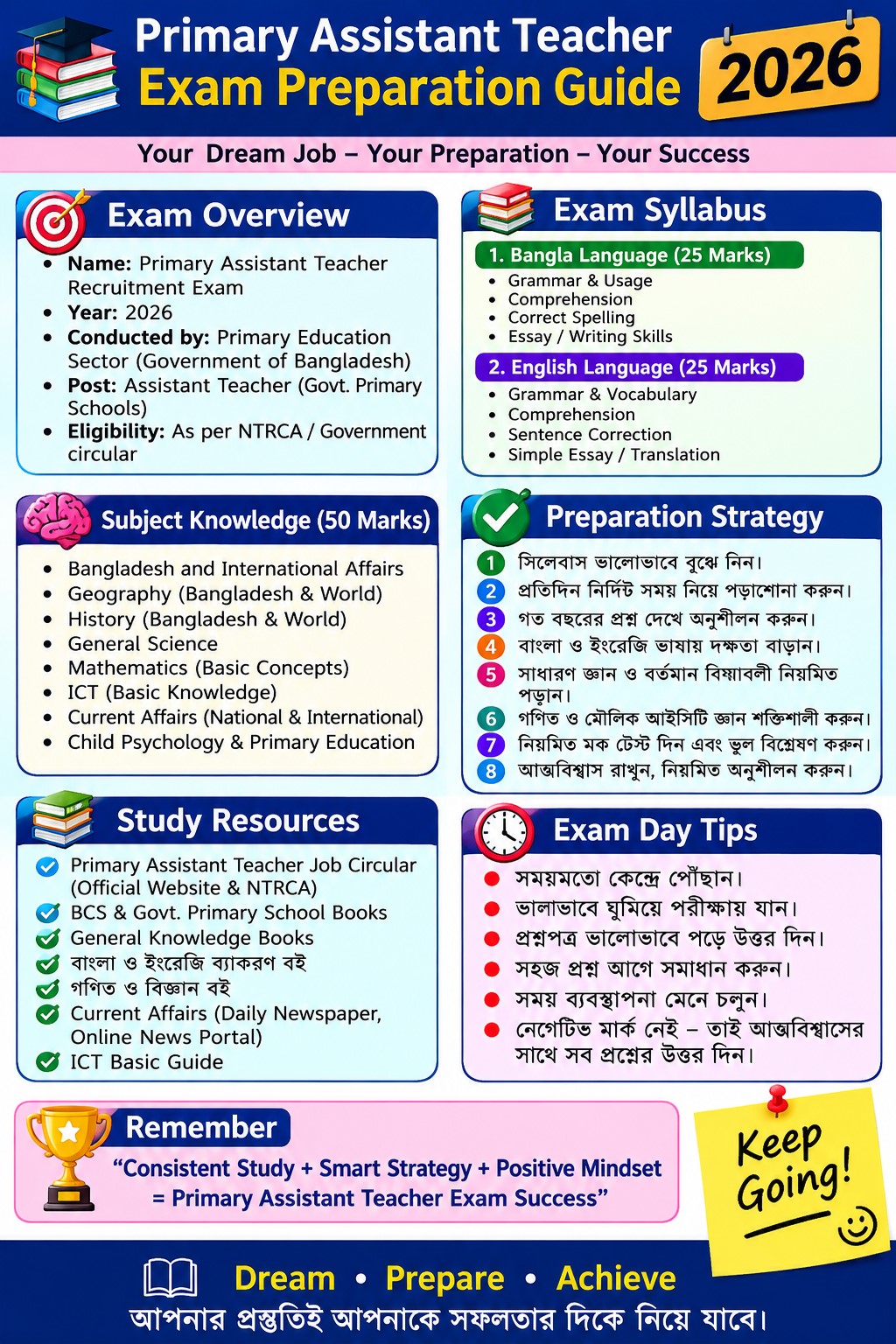
Key Highlights
This guide explains how the primary assistant teacher exam works in an easy way. It is simple and helps you get ready.
You will see the main subjects covered, know the types of questions there are, and get a clear idea of how primary school teacher marks are given.
The guide covers child development, social studies, english, and talks about the skills a teaching assistant needs.
You will learn how teaching assistants and those who want to be a primary school teacher can build a steady routine.
The guide gives useful tips about books, an app, practice with mock tests, and shows how practical experience can help with primary teacher recruitment.
Introduction
If you want to be a primary school teacher, this guide can help you begin with a clear plan. Getting ready for the Primary Assistant Teacher Exam 2026 is not just about reading books. It is about learning the right subjects, using smart practice, and slowly building your confidence over time. The exam will look at your subject knowledge, child development, and assessment of teaching assistant skills. So keep your study focused, stay steady, and make sure you can handle every step right from the first day.
Understanding the Primary Assistant Teacher Exam 2026 in Bangladesh
Many people first want to know what the test is like. The primary assistant teacher exam is often a key part of primary teacher recruitment. The test will check if you know the main school subjects. It also helps them see if you can help in the classroom with simple tasks.
Most practice books and guides show that the questions are usually in a multiple choice style. The tests have english, social studies, child development, communication, instructional support, and assessment of teaching assistant skills. When you know how the questions look, you should check how the test works, what topics are there, and the key dates you need to remember.
Exam Structure, Subjects, and Mark Distribution
A good way to be ready for the exam is to know how it works. The practice papers show there will be about 50 to 60 multiple-choice questions. You have to answer them in around 90 minutes. Many practice tests say you need to score at least 70% to pass. So, it is important to be fast and correct with your answers from the start.
The exam looks at english, general classroom knowledge, child development, educational psychology, how to help with lessons, and rules for teachers. These topics show what teaching assistants need to know to help in the classroom.
Area | What to expect |
|---|---|
Format | Multiple-choice questions |
Question count | Around 50 to 60 |
Duration | About 90 minutes |
Common focus | english, child development, instructional support |
Goal | Strong score through accuracy and time control |
This view shows the way primary teacher marks might be set up. But you should read the final circular for official updates.
Eligibility Criteria and Important Dates
Before you start making a study plan, you need to read the rules for the primary teacher recruitment from the official notice. The tips here are made to help you get ready for the test. But, they do not give all the steps you need to take to apply. So, you must look at the latest job circular page to learn what education and other things you need to apply for this role.
One thing is clear. Candidates with practical experience, like teaching assistants, internships, or watching classes, often understand the exam topics quicker. That is because many questions are about real-life school situations, student interaction, and classroom support.
When you think about important dates, it is best not to wait until the last minute. Start early so you are ready. Check the job circular, admit card, and result pages often. If you begin your study before the dates are out, you get more time to read everything and feel calm. You will not rush, and your study will feel easier and go well.
Essential Syllabus Insights for Primary Teacher Education
Many people read a lot, but they feel lost. This is because they do not stay focused on what is needed in the syllabus. A good way to fix this is to link what you read with what teaching assistants or future teachers do. This makes your study feel useful. It will feel less random to you.
From what is there, the main things to pay attention to are child development, social studies, educational psychology, how to support students, and assessment of teaching assistant skills. Next, you will see the main subjects and the topics that matter most.
Core Subjects: Bangla, English, Mathematics, General Knowledge
You need to begin by learning the main subjects in your primary teacher exam syllabus 2026. These subjects give you a strong start. This strong start helps a lot in the written test, and it also helps you later in teaching. When you feel at ease with these subjects, you will feel more confident during practice.
Focus your study on:
Bangla helps you with grammar, understanding text, and speaking clearly.
English is good for learning new words, making sentences, and basic understanding.
Mathematics is used for solving school problems and getting the right answer.
General knowledge keeps you updated and helps you know facts.
Child development and social studies are what you need in class for learning about people.
Do not see these as separate things. A primary school teacher needs to use language, numbers, awareness, and understanding what students need all at once. The best primary school teacher preparation books help you work on all these subjects in a clear way. They have multiple-choice questions and give short, easy-to-read answers.
Key Topics and Weightage in Primary Teacher Exam Syllabus 2026
Once you know the subjects, you need to look for the high-value topics. The exam plan often gives more marks to people who answer questions about how something is used in real life, not just things they remember from memory. That’s why it is so important to pick the right topic when you make your revision plan.
Pay close attention to:
The basics of child development and the way kids learn and behave.
How students act with others and what we know about how they learn.
How to run a classroom and help teach.
How to be professional, do the right thing, and keep things private.
Helping with the curriculum and making changes to materials when it’s needed.
Helping with records and doing assessment jobs.
This mix of topics shows the type of work that a primary school teacher or helper often needs to do. Every school may measure things in its own way, but people find these themes often in study books for teaching jobs. Use these as the main areas to get ready for the Primary Assistant Teacher Exam Preparation 2026.
Beginner’s Guide: How to Start Your Primary Assistant Teacher Exam Preparation
Starting late can make you feel rushed and worried. Starting smart lets you feel in control of the process. If you are new to this, you should first learn about the main assistant teacher exam pattern. After that, get the trusted study materials that you need. Set a daily target that you can handle. Stay focused on doing it every day. Do not worry about doing it for many hours.
A good way to get better is simple. First, learn the basics. Then practice them a lot. Be sure to look at your mistakes each week. If you get some practical experience by watching in a school or by helping out, you will understand things more. This will help you know what resources to use first.
What You Need to Get Started (Resources, Books, Online Tools)
You do not need many things. You just need the right books, some practice tools, and time to work on exam-style questions. Begin by using materials that help you get the ideas. After that, practice with short MCQ tests. This way, your learning stays active.
A strong starter set includes:
There are books for english, general knowledge, and school-level mathematics.
A book with previous year questions for primary teachers is there, and it has all solved answers.
There is a mock-test app. It has flashcards and quizzes with a timer.
You can also get short study guides. These guides are about child development and talk about how to help students in the classroom.
Online tools can help you save time. These practice platforms have short practice sessions. They give instant feedback. There are flashcards for quick revision. These all help you keep things simple. You should check the syllabus page, previous questions page, model test page, job circular page, admit card page, and result page often. This will help you keep your preparation organized.
Step-by-Step Preparation Process for Success
Good preparation works best when you split it into steps. First, set up a routine that you can keep to. After that, focus on one topic at a time. Then practice, look at your work, and try doing practice tests with a timer. This cuts down on confusion, and you get to see real progress as you move forward.
Whether you want to be one of the teaching assistants who get better jobs, or you wish to be a full primary school teacher, it is good to practice a lot over time. Do not just practice hard all at once. The next two steps will help with planning your days and using tests to raise your scores.
Step 1: Creating a Study Plan and Daily Routine
A good study plan for a primary teacher should be easy to follow each day. You just need to divide your time for learning, practice, and reviewing what you read before. This helps make your daily work fair for all subjects, so one subject does not take up too much of your time.
A useful daily plan may include:
One session for the child to learn Bangla, english, mathematics, or general knowledge.
One practice round with MCQ questions we used before.
One time to review weak areas or topics about child development.
One quick look at notes before ending the day.
If you have 30 days, try to read different subjects each day. Every week, go back and look at what you learned. If you have 60 days, use the first month to cover all the topics. In the second month, practice using mock tests. People who have practical experience should tie new topics to what they saw in the classroom. This will help them remember and really get the ideas better.
Step 2: Practicing with Previous Year Questions and Mock Tests
Practice is where you make your study feel real. When you do a primary teacher previous year question set, you can find the main topics that show up often. This way, you get faster and feel good about the kind of questions you will get. You will see if you do not know the answer, take too much time, or make small mistakes while you work.
Use these methods:
Start by going through solved question papers by topic. Then practice with the whole set.
Take mock tests with the timer on. Do them at least one or two times each week.
After each practice, check every answer that you got wrong. Write down the reason for the mistake.
This way is good because practice tests feel just like the real test. If you want to have better scores in english, child development, or classroom help, practice exams show you what you need to get better at. It is also the easiest way to get ready for the test day. This means you will not see anything new when you go in.
Conclusion
Getting ready for the Primary Assistant Teacher Exam in 2026 needs both planning and hard work. You have to know the exam pattern and read the syllabus. A good study plan will help you a lot. Practice old exam questions as much as you can. Doing that will give you a better chance to do well in the exam. The most important thing is to study every day in a steady way. Stick to your routine and use the right books or websites. If you feel stuck or unsure, the best thing to do is ask others for help. You can also get a free consultation for study advice that is just for you. Keep moving ahead, your effort will be worth it in the end. stay on track, and keep believing in yourself!
Frequently Asked Questions
What are the best books for Primary Assistant Teacher Exam preparation?
The best books to use at exam time are the ones that show you the main subjects in a clear way. They should also have lots of MCQs. Get books for english, mathematics, general knowledge, and topics about children. It is also good to have one book with solved questions. For people who want to be teaching assistants, it is better to read simple explanations and practice often. You do not need to have many books.
How can I access solved previous question papers?
You can use old question books, practice tests, and online practice tools to find solved question papers. A good app will help you with timed quizzes, flashcards, and fast feedback. For the primary assistant teacher exam, work with solved papers and practice tests at once. This will help you get better at english and do your work faster too.
What is the most effective study routine for exam candidates?
The best way to study is to have a short routine that you do every day. It is good to keep it steady. Try focusing on just one topic each day. Solve MCQs and look at your weak spots at night. Mix in lessons about general knowledge, language, and math across the week. If you have practical experience, join what you learn to events in the real classroom. This is useful for anyone who wants to get a job as a primary school teacher.
Where can I find online communities or discussion groups for exam preparation?
Look for online groups that help people practice for exams and focus on primary teacher recruitment. Try to join study groups that cover different subjects. Find forums where candidates talk about the latest updates on primary teacher recruitment. You can also use an app with practice tools. This way, you get to meet learners who are working hard and stay active.
Pick groups that have good questions and tips for practice tests. Make sure they give real updates from the circular and not just false news.